Friday, June 21, 2013

So What About Christian Rap?

“Bring the cannon, Abel; this is about to get ugly.”

You tell the truth, you makes some enemies, that’s how it goes.  The truth is, there’s no way to answer this question without some people being upset with me.  That’s okay.  It’s high time someone took an honest look at this.

In the interest of being fair, let me mention that I have listened to rap, including Christian rap; so I feel like I have a fair right to criticize it if it needs to be criticized.  On the other hand, it’s not my favorite kind of music and I don’t listen to it much, so I don’t have very clouded judgment when it comes to giving it praise if I so choose.  All in all, I think that I have a pretty neutral position from which to judge.

First, let’s talk about rap music in general.  Rap has been a pretty big thing since the ‘80s and is very
different from the ‘80s.  Compare Vanilla Ice and Will Smith with 50 Cent and Eminem and you’ll find very different styles for very different decades.  In the interest of being relevant, let’s consider what modern rap has to offer.

Rap is generally about three things: swag, women, and lifestyle.  By swag I mean arrogance.  By women I mean degradation and sexualization of women.  By lifestyle I mean drugs, drinking and partying.  Notice I said generally.

The thing that some critics don’t realize is that there is a segment of rap music that is deeper than the three things I just mentioned.  Eminem often speaks of his daughters.  For example, I n his hit “Mockingbird,” Slim Shady laments how he wanted very badly to give his daughter a good (a mockingbird and a diamond ring), but the hardships of their life made that impossible.  Mike
Shinoda of Fort Minor on “Kenji” raps about his father’s trials as a Japanese-American during World War II.  There are some very beneficial things to gain from these songs.  That said, this segment is in the minority.

I would argue, however, that this segment is significant enough to say that the genre is not exclusively filth.  It is dominated by filth, but not exclusive.  I would argue that no genre is inherently wrong in terms of musical style; what is wrong is lyrical trash. 

So what about “Christianizing” the genre?

There’s a danger in the mindset here - that anything can be okay as long as we slap a Christian label on it; or if we add “for Christ” on the end of it.  Can that justify anything?  Does it change anything?  Some things shouldn’t be Christianized.

Even more pressing is this concept when it comes to music.  God has instructed us to worship him through song, but we’ve taken that and turned into just another segment of pop culture.  Instead of a congregation of Christians singing praises to God or an individual Christian singing to God for thanks, there’s a man with microphone on a stage and people worship him while he “worships” God.  There’s a problem there.
I’m not against Christians making music.  I am against making Christianity another segment of pop culture.

My conclusion: if Christians are making music that has beneficial messages, then great.  However, if we are trying to mix worship and pop culture, we’ve gone wrong.

Tuesday, June 18, 2013

Who Makes Dolls Out of Goo? And Who Let Them Play with Magnets?

The Goo Goo Dolls have always been kings of melodious optimism.  There’s no mistaking Johnny Rzeznik’s iconic voice or the group’s signature, upbeat sound, but have they evolved by the tenth album? 
I was really excited when I saw that “Magnetic” was coming out, but I wasn’t sure what to expect.  The result was somewhat predictable, but still enjoyable. 

The most important part of any music is its message.  Lyrically, the album is in stark contrast with recent releases.  In an age of constantly increasing moral depravity, the Goo Goo Dolls are surprisingly refreshing in their take on things.

In “Rebel Beat,” Rzeznik sings “And when the sun goes down, and we fill the streets/You're gonna dance/'til the morning to the rebel's beat/You can take everything from me, oh, yeah/You can take everything from me/'Cause this is all I need.”  In Bulletproof Angel, he sings “She asked if I'm a lover/I say I try to be/She said love until your heart breaks/cause there are no guarantees.” 

This kind of optimism is present throughout the entire record, really with only one exception.  “Keep the Car Running” contains a more melancholy tone, and says “There are days when I feel that everything that's good is gone/There are times that I feel no matter what I do, it's wrong.”  The song is a bitter goodbye to a less than delightful circumstance, as Rzeznik sings in the chorus, “Tired of waiting around/Now what are we becoming?/Keep the car running.”

Musically, the album is either exciting or depressing, depending on your perspective.  The first Goo Goo Dolls album I listened to all the way through was “A Boy Named Goo,” from 1995.  There have been four Goo Goo Dolls albums in between “A Boy Named Goo” and “Magnetic,” yet their sound hasn’t changed at all.  It is more consistent; there is an utter absence of filler tracks on “Magnetic,” but their sound has not changed at all over ten albums.  To fans who love the Goo Goo Dolls sound like myself, that’s not necessarily a negative thing.  Others, however, may ask “Why would I buy the same album ten times?”

Song Breakdown:
Rebel Beat: This is undoubtedly the strongest song on the record.  The catchy tune makes you want to sing along and put it on repeat for the next half hour.  Johnny Rzeznik said in an interview that the song was inspired by seeing streets closed off in New York because of big parties going on.  Put simply, the song is about enjoying life.  5/5

When the World Breaks Your Heart: “When the world breaks your heart, I can put it back together.”  This song is a promise to loved ones that when the world crushes you, remember that you’re not alone.  God should be our ultimate comfort, but being able to lean on someone (and being someone that others can lean on) is a positive uplifting message that we need more of.  4/5

Slow It Down: The line “Oh just shut your mouth and know that you are everything to me” says it all.  Let’s be honest here – it’s a sappy love song.  I don’t mind that, but it isn’t as well pulled off as previous Goo Goo Dolls love songs, which often leave me in a state of euphoria.  This one doesn’t, but it’s still a decent song.  3/5

Caught in the Storm: The song opens by saying “Every secret that you ever told me I kept down inside,” but it turns slightly sour.  Rzeznik sings “I’m caught in this storm we call love, so alone, come find me.”  It’s bittersweet, but the noteworthy thing here is that he still loves the girl during the troubled times.  That’s important in an era where when something is broken we throw it away instead of fixing it.  5/5

Come To Me: Musically this song leaves behind the ballady feel for an acoustic vibe, and is perhaps the most clever song lyrically.  The first verse says “I'll be kind, if you'll be faithful/You be sweet and I'll be grateful/Cover me with kisses dear/Lighten up the atmosphere/Keep me warm inside our bed/I got dreams of you all through my head/Fortune teller said I'd be free/And that's the day you came to me.”  That’s a pretty good representation of the song.  I really like the love-struck lyrics, but it’s really hard to overlook the casual reference to pre-marital sex (Rzeznik is engaged, but not married).  4/5

Bringing On the Light: To be honest, I’ve never cared too much for Robby Takac’s voice in comparison to Johnny Rzeznik’s.  His hoarse smoker voice clashes with the melodic Goo Goo Dolls vibe.  Occasionally they’ve used him when venturing outside of their niche into slightly heavier rock, and then it’s worked, but on this track it makes me cringe.  I feel like it would most logical people.  The song itself isn’t too bad, but the vocals are distracting and somewhat repulsive.  In addition to the musicality, the lyrics are so vague that I can only venture an obscure guess as to the meaning of the song.  It’s about old days.  And something about light.  All in all, it’s pretty weak.  2/5

More of You: I’m torn on whether this or “Rebel Beat” should be called the strongest track.  This song probably has the most singable melody and Rzeznik sings with dedication that he will never let his woman go and will always love her.  Great song, great message.  5/5

Bullet Proof Angel: I like this song for the most part.  The strings and backup singers backing up the sheer emotion of this song are very powerful.  I’m not crazy about love songs that refer to the object of the singer’s affection as an angel, simply because it contributes to unrealistic expectations that cause many to desert a loving, helpful relationship in search of perfection that they will never find.  Still, a good song overall.  4/5

Last Hot Night: The title of this song really should have been different.  When I saw this, I thought it was going to be a “sex song,” but in reality there is nothing risqué about it at all.  The song opens by asking a girl to dress up and go out and have fun with him, singing “It’s the last hot night in America/It’s the last hot night in the world/And I’m looking for you.”  The only potential problem is he never tells us why it’s the last night.  Unfortunately, that vagueness weakens the song.  3/5

Happiest of Days: This is another Robby Takac track.  It isn’t cringe-worthy like the last one, but it’s still weaker than it would have been had Rzeznik contributed vocals.  I do believe that this could have been strong if the two of them had done it duet-style.  Takac sings about “struggling through the happiest of days.”  This is another vague one.  At this point I must say the lyrical strength is decreasing as the album reaches its close.  3/5

Keep the Car Running: This one is slightly more melancholy, with the line “There are days that I feel that everything good is gone.”  It’s a song about going through change when things have turned south.  It seems like an odd choice for a closing track, putting the only pessimistic song at the end, but it turns out well, musically.  It’s another singable song, and I’d put it right behind “Rebel Beat” and “More of You” musically.  4/5


Monday, June 17, 2013

I Wear a Fez Now. Fezzes Are Cool.

I have to admit, I kind of wish the lamp on my desk contained an awesome blue dude who could sing, dance, and, ya know, turn me into a pseudo-prince with an awesome elephant so I could win the heart of the girl of my dreams.  Am I shooting to high? 

Aladdin was one of my all-time favorites growing up.  It was definitely my favorite at one point, and in the end probably only was surpassed by The Lion King II, and today Aladdin has reclaimed first place in my heart (not that I think it’s perfect; we’ll get to that in a second). 

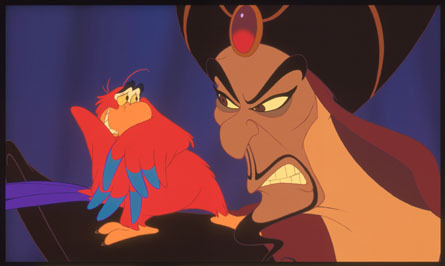
The driving force of the plot itself is Jafar and his over-talkative parrot Iago.  Jafar, the Saltan’s advisor, has
a plan to overthrow the Saltan by obtaining a magical lamp, which we eventually find contains the genie.  We witness one of these attempts at the beginning of the film, when a thug enters the live cave and is swallowed alive when he touches the other treasure.  The mysterious cave-beast then says he must bring “The diamond in the rough.”  Enter Aladdin: abused street rat with a dream to be someone different.  After he’s found with the princess and imprisoned on counts of kidnapping, Jafar, disguised as an old prisoner, leads him back to the monstrous cave (don’t worry, I’ll get to Aladdin and Jasmine’s story in a minute).  Aladdin manages to get the lamp, but when Abu gets greedy and goes for some of the gold, the cave closes in on him. 

Thankfully, Aladdin figures out the lamp and tricks the eccentric genie into getting him out voluntarily (who then reprimands him, saying “No more freebies”).  Through a long series of events, Jafar schemes to get Jasmine to marry him, who is horrified and refuses.  Jafar eventually gets his hands on the lamp and turns the kingdom into a living nightmare and with his magic (Jafar being a sorcerer himself) sends Aladdin far away.  Aladdin, undeterred, walks back and defeats Jafar, and they all live happily ever after.
Before I start in on a heavy criticism of the film’s finer details, I want to spend some time talking about Aladdin and Jasmine’s story.

When Aladdin and Jasmine meet, Aladdin saves her life (or at least her hand).  He subsequently shows her around and the two are quickly falling for each other when the palace guards swing in and take her back and throw Aladdin in prison under the guise of kidnapping.  When he gets back out with the help of the genie and marches into town as a prince, Jasmine, not knowing that he is the same man, is less than enthusiastic.  But, through his persistent efforts, and the help of a magic carpet, he is able to win her heart once again, and through a lot more work than the first time through. 

So, that covers the plot.  Now comes the criticism.  I did say that this film was one of my favorites.  That does not mean, however, that it gets any special treatment.  There are a few problems with the film.
First, there is a moral conundrum: how immoral is stealing, really?  Aladdin is portrayed as an abused unfortunate homeless boy, while the vendors that he is stealing from are portrayed as stringent, selfish mongrels with an overabundance of product and no room in their hearts for pity.  No one stops to ask “What about the vendors?” because Aladdin is the victim and they are the abusers.  I might feel differently about this point if Aladdin were remorseful for his stealing, or even admitted that it was a necessary evil for him to survive; but instead, he and Abu make a sport out of it. 

Secondly, the portrayal of Jasmine’s father, the unnamed Saltan, is beyond horrifying.  Instead of the father figure being a strong leader, protector, and guardian of his daughter and of the country, he is a weak pushover whose very demeanor is about as masculine as a tutu.  In contrast, Jasmine is strong, independent, and ambitious.  I don’t have a problem with Jasmine’s character.  What I do have a problem with is her father and her in comparison.  Between the two, it is Jasmine who possesses the masculine characteristics.  We have enough gender confusion in our society as is, we don’t need effeminate fathers contributing to it.

My third negative is not so much a criticism of Aladdin itself as it is a criticism of the portrayal of love in film in general, but I believe it to be a valid criticism nonetheless.  When Aladdin is telling the genie why he loves Jasmine, what comes out are not descriptions of her character, but rather her appearance.  Her hair.  Her smile.  You get the idea.  This feeds into a monstrosity ideology that women are to be loved not for who they are but for what they look like.  Don’t get me wrong, I will swear on my very life that women got the looks between the two sexes.  No argument there.  But reducing women to that as being their primary source of value is chauvinistic and degrading.  Truth be told, I love Aladdin and Jasmine as a couple.  I just despise his reasons for pursuing her to begin with.


With all of that said, the film is definitely not without its positive points.  The crux of the film really comes from Aladdin’s insecurity in his own identity.  He wins over Jasmine when he is a prince, but he finds himself unable to live with the lie that he has created.  Confounding the problem is the fact that he’s promised the genie that he will free him with his third and final wish, so the lie will have to stop somewhere.  When it does, will she still love him?  How can she?  The lie ultimately backfires on him with disastrous consequences.  However, when he returns and defeats Jafar, he finds that Jasmine doesn’t care that he isn’t a prince.  If he had just been himself all along, she would have loved him anyway.  This is an important point.  While Aladdin’s reasons for loving her to begin with were shallow, we can certainly see that she loved him for who he was, not what he had.  The moral of the story is this: don’t lie to capture love.  True love is not possible without full disclosure.  A monkey with a fez and a magic carpet also helps.

Saturday, June 15, 2013

I'm Glad You Lost the Red Briefs Bro. Good Call.

“Sometimes you have to take a leap of faith first; the trust comes later.”

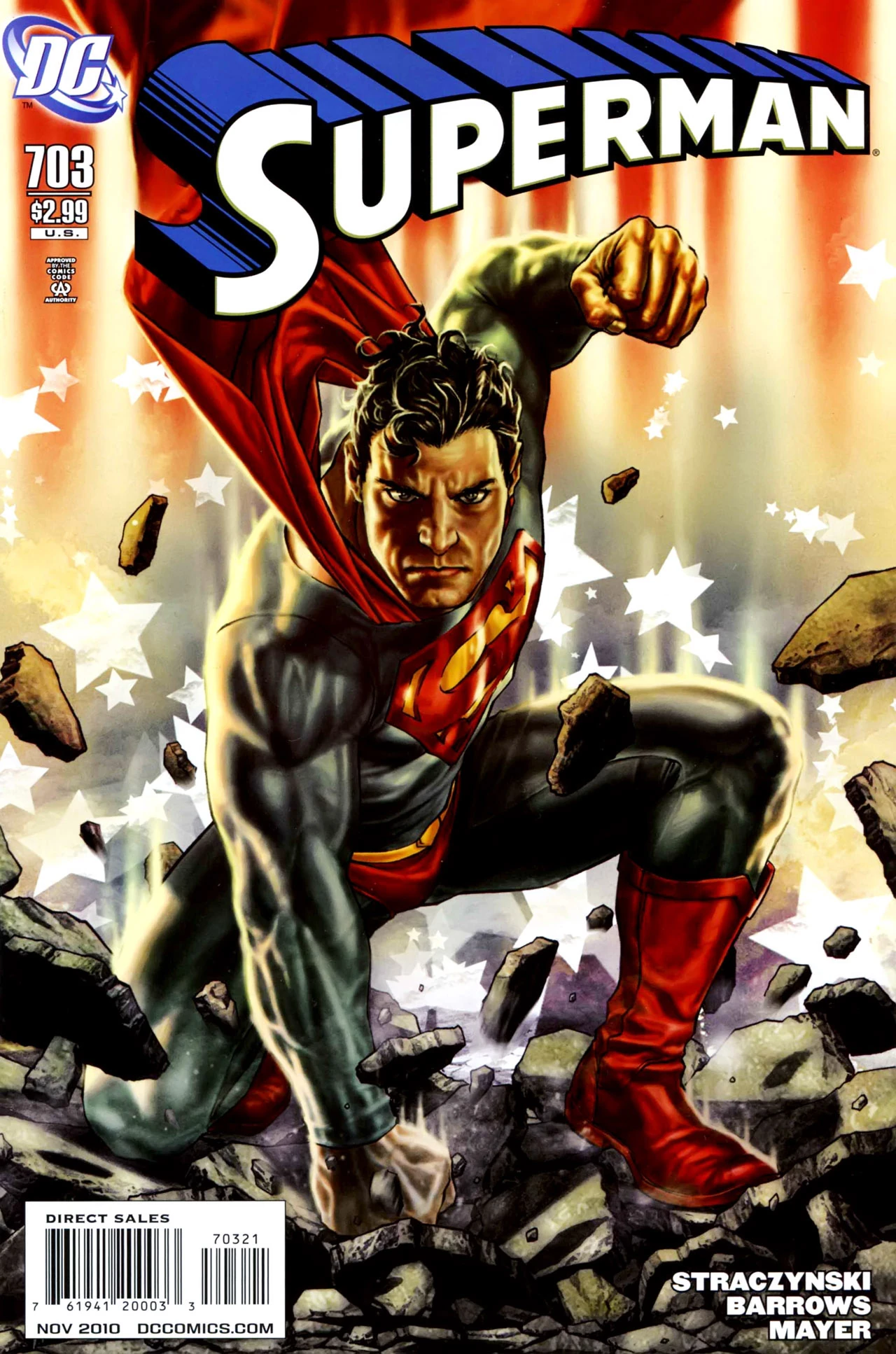
I have to admit, I’m usually not a big Superman fan.  I think he’s overpowered and one-dimensional, not to mention the illogical lack of a need to hide his face.  However, I left the theater last night pleasantly surprised.
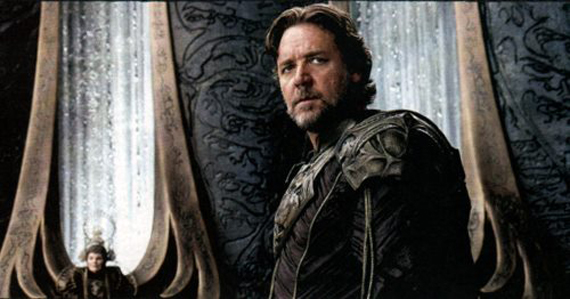
The film spends quite a long time on the background story: about a half hour, actually.  About ten minutes into the movie I started to wonder if the movie was actually about Jor-El; but, more screen time with Russell Crowe is never a bad thing. 


The council on Krypton has let Krypton destroy itself and the planet is dying.  So General Zod attempts a takeover while Jor-El does some fancy work of his own and manages to get his son, Kal-El (a.k.a. Clark Kent) off of the planet, along with an important artifact called the codex, before Zod kills Jor-El.  Zod’s attempt at a coup is subsequently put to a hold and Zod and his troops are thrown in a black hole a very short time before the planet implodes, killing Lara and leaving Kal-El an orphan bound for Earth.

The next several minutes show Kent as a wanderer bouncing from job to job and place to place with occasional glimpses into his childhood.  Even with these glimpses, we never see Jonathon and Martha Kent discovering the boy Kal-El.  I didn’t care for that, but it is a minor detail.  As time progresses, we eventually meet relentless reporter Lois Lane, and at about the same time Kent meets his father; or, a memory of his father, so to speak.  This shadow of his father gives him the familiar suit.

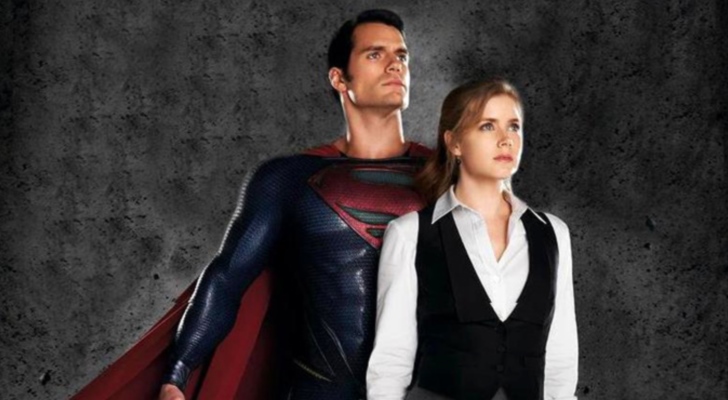
I want to pause here to make a point: Lois Lane is the strongest superhero love interest I have ever seen on
screen.  She is strong, independent, determined, and full of integrity, and she is all of that without sacrificing an ounce of femininity.  That is hard to pull off.  She also manages to do so while still being Superman’s “help meet” in a sense.  She wasn’t defined by him but she did care about him.  Ultimately, he wouldn’t have succeeded without her.  She wouldn’t have succeeded without him.  It was ultimately a beautiful match that you don’t often see in superhero movies.

Shortly after, General Zod reappears, demanding that Earth surrender Kal-El.  What ensues is roughly an hour and a half of drawn out, repetitive battle scenes cut together with a terrified Daily Planet staff trying to survive.  Throw in a heroic and reckless girlfriend and wa-la: Superman wins and Zod goes bye-bye.
There are a few things that bug me about the movie itself.  I’ll admit that I’m being a bit picky, but hey, a movie about the original superhero needs to have high standards, right? (These are primarily for readers who have already seen the film).
                1. If I met my biological father (even a shadow of him) after 30 years, I think I would have more of an emotional reaction than calmly saying “You’re my dad.  I have questions.”  Come on bro, show a little emotion.  It’s not toxic, I promise.
                2. Superman’s abilities come from the fact that he’s a kryptonian on Earth.  Basically, all limitations pertaining to physics are really watered down on Earth compared to Krypton, which means that the other kryptonians are just as powerful, as shown in the never-ending battle scenes.  But when Lois changes the gravity field on Zod’s ship to be Earth’s, Superman pummels a kryptonian thug as though he’s a human, when in reality they should be equally matched.  Kind of convenient, don’t you think?
                3. Superman doesn’t wear a mask.  The whole world saw him.  For crying out loud, the staff of the Daily Planet itself was in mortal danger and Superman saved them.  Then Clark Kent saunters up as an intern.  With glasses.  But naw, I wouldn’t remember the face of a flying man that saved the world from an alien invasion.  Besides, glasses change his face sooooooo much . . .
4. I despise deception.  Included in deception is saying “Hey, the conflict is over, he’s kissing the girl, all is fine and dandy!”  Then the villain pops up and they fight for another ten centuries.  That happens.  And it’s annoying.  And it’s long.  And annoying.

With all of that said, there are some really great things that can be taken from the film.

Superman is presented in “Man of Steel” unapologetically as a Jesus figure.  His father is not of this world, he has the power of a god, and saves the people from a coming doom (Jor-El tells him “You can save them.  You can save all of them”).  Aside from a couple of questionable decisions (lying about his work history and stealing clothes, for example), the integrity of Clark Kent is virtually spotless.  Flashbacks of his youth (and even a scene in the present) show him being abused and mistreated, but he never strikes back, even though he tells his father (Jonathon Kent) “I really wanted to hit him.”  Jonathon also tells his adoptive son ““You’re not just anyone. One day, you’re going to have to make a choice. You have to decide what kind of man you want to grow up to be. Whoever that man is, good character or bad, it’s going to change the world.”  Kent didn’t “just happen” to have integrity.  He chose it.  I appreciate the fact that the Jesus figure is full of integrity, but I also appreciate the fact that they highlighted his choice. 


At the end of the film, Clark tells Martha (his adoptive mother) that he wishes his father (Jonathon) had lived to see him become such a great man.  Martha responds that he did.  We then see a flashback to Clark as a boy, with his father watching him.  Clark is not a great man because of what he did, Clark is a great man because of who he is.  That is a very powerful point.  We are too concerned with accomplishments and not enough with character.


Superman may not be my favorite superhero.  “Man of Steel” may not even be my favorite superhero movie.  But the integrity of Clark Kent as well as the messages of the film as a whole are lessons that we as a culture desperately need.  I give the film an 86 cinematically and a 98 for the worldview.

Also, for a guy who doesn't care too much for Superman, I really can't wait for the sequel.